Africa, Not Poor By Accident
In 2025, I travelled to Africa (Ghana, to be precise) for the first time. I arrived carrying two emotions: nervousness and excitement. Nervous because Africa, despite being called the motherland, had always felt distant to me… filtered through headlines, history books, and second-hand narratives. Excited because something in me knew this trip would be more than a change of scenery. It was.
I had an incredible time. Yet when I returned to London, I didn’t rush to write a glowing travel diary. Not because the experience wasn’t worth sharing, but because I’m not a lifestyle or travel blogger; and more importantly, because I don’t write in the moment. I write after the moment has settled.
I’m the kind of writer who needs time to sit with an experience, to interrogate it, to research further, and to let it challenge what I thought I knew. And that was exactly what this subject demanded: distance, research, and the clarity that comes from understanding rather than assumption.
Questions began to surface… uncomfortable, thought-provoking ones. Who tells Africa’s story? How has it been framed? And why does so much of what we think we know about the continent feel incomplete?
So this is not a blog about a holiday.
This is writing about Africa from a deeper place; an attempt to understand the motherland not as a destination, but as a system, a history, and a truth that has been misunderstood for far too long.
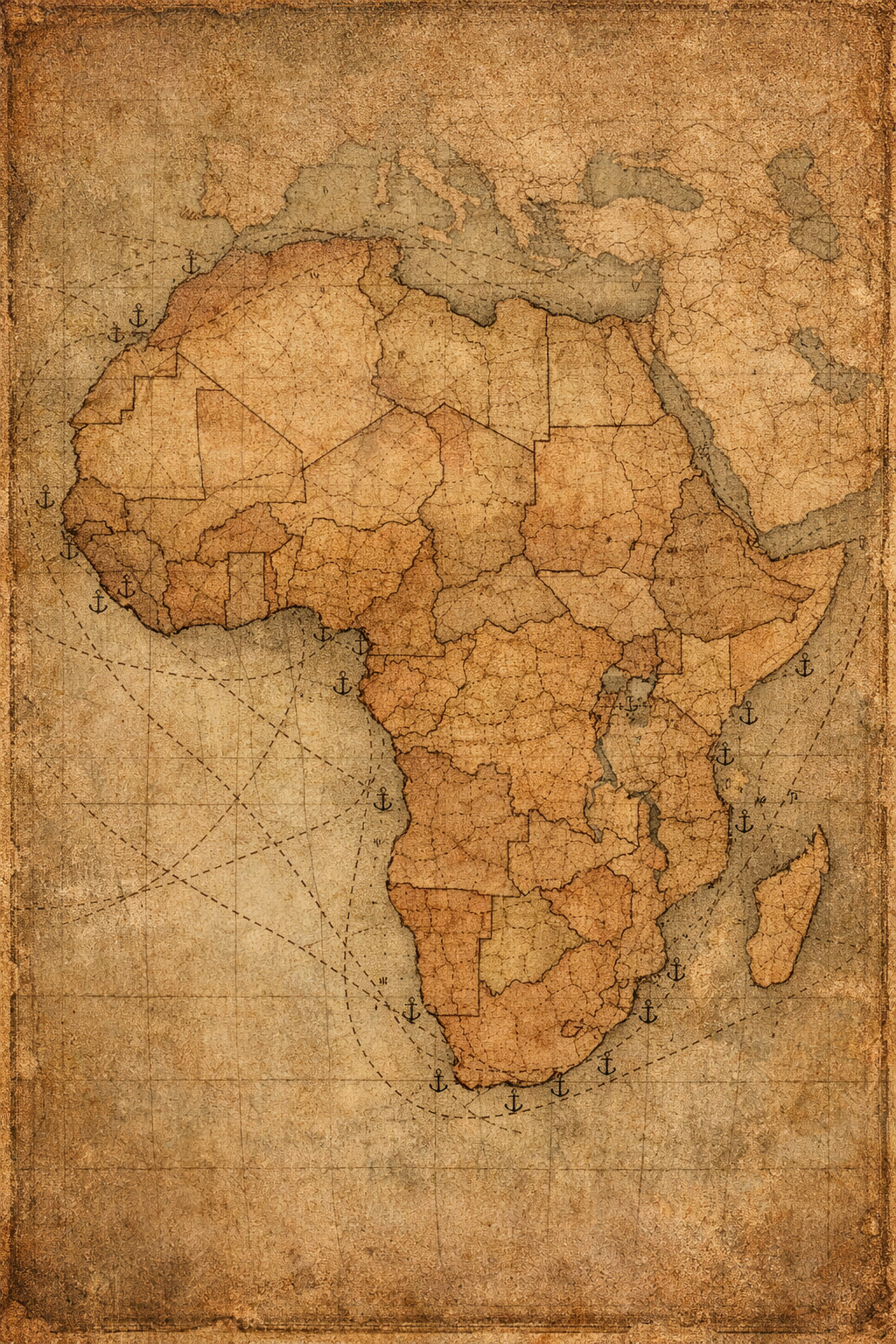
Africa: How Extraction, Debt, and Narrative Shape a Continent.
How Poverty Was Designed
By any reasonable measure of wealth: natural resources, labour, land, and human potential, Africa should be one of the richest places on Earth. The continent holds vast mineral reserves, some of the world’s most fertile land, and the youngest population globally. And yet, on paper, it remains among the poorest.
This contradiction is often treated as a puzzle. In reality, it is a pattern.
For decades, Africa’s economic position has been explained through a familiar set of narratives: corruption, incompetence, overpopulation, dependency on aid. These explanations are convenient. They locate the problem entirely within the continent and allow the rest of the world to step away without asking harder questions.
But once we look beyond headlines and humanitarian slogans, a different picture begins to emerge.
To understand why Africa remains poor in a world that benefits so heavily from its abundance, we have to stop focusing solely on what happens inside African countries and start examining the global systems that surround them, not the version of economics taught in textbooks or presented in charity campaigns, but the economics that operate through trade agreements, financial rules, tax structures, and legal loopholes.
What becomes visible is not partnership or generosity, but extraction… ongoing, largely legal, and deeply normalised. Wealth doesn’t simply fail to reach Africa; it is systematically pulled out, redirected, and accumulated elsewhere. And the more invisible this process becomes, the easier it is to blame the continent for outcomes it did not design.
Africa is not poor because it lacks value. It appears poor because its value has been continuously removed.
Until that reality is acknowledged, conversations about “development” will continue to miss the point and the system that benefits from this imbalance will remain comfortably intact.
The Richest Poor Continent
By every law of economics, Africa should be a creditor, not a debtor.
Africa’s resources are embedded in everyday global life: the cobalt inside our phones, the uranium lighting European cities, the gold stockpiled in financial centres, and the diamonds sold as luxury across the West. This contradiction: the richest poor continent, raises an uncomfortable question:
“How can a place that supplies the world remain poor within it?”
We are often encouraged to look inward for answers: corruption, poor governance, lack of education, dependency on aid. These issues exist (and we will return to them), but they are not the cause. They are symptoms of a deeper system designed not to build wealth within Africa, but to move it outward.
From the Global South to the Global North
We are taught to believe that Africa survives primarily on aid, loans, and foreign investment, sustained by the goodwill of wealthier nations. The reality is far more uncomfortable.
When economists examine the full picture; money entering African economies through aid and investment, set against what leaves through debt repayments, profit repatriation, tax avoidance, and illicit financial flows… a different story emerges. Year after year, the continent loses tens of billions of dollars, quietly transferred out of its economies.
In effect, some of the world’s poorest countries in the Global South are subsidising the richest ones.
This wealth does not leave in obvious ways. It disappears through balance sheets, accounting practices, and legal loopholes, systems that are technical, dull to most observers, and devastatingly effective in their impact.
The Quiet Mechanics of Extraction
Much of Africa’s wealth does not leave the continent through corruption or crime. It leaves legally.
One of the most common mechanisms is trade mis-invoicing. The term sounds technical, but the logic is simple.
Imagine a multinational company mining copper in Zambia. In theory, that operation should generate public revenue: money for schools, hospitals, and roads. But instead of selling the copper at its true market value, the company sells it on paper to its own subsidiary in a tax haven for a fraction of the price. On the books, the Zambian operation appears barely profitable, or even loss-making. Little to no tax is paid.
That same copper is then sold offshore at full price. The profit doesn’t vanish, it simply reappears elsewhere, safely parked in private accounts. This isn’t illegal. It’s routine.
In the early 2000s, as global copper prices surged, mining companies operating in Zambia reported losses. The country’s president at the time openly complained that billions were leaving while only “peanuts” remained. When he attempted to introduce a special tax to capture some of that profit for the public, it was quickly blocked under corporate pressure.
Today, experts estimate that billions of dollars leave Africa each year through similar practices: often exceeding what the continent receives in aid and public revenue. Much of this wealth ends up in offshore tax havens linked to Europe and North America.
So when African governments struggle to fund healthcare, education, or infrastructure, the issue is not always a lack of money. More often, it is a question of where that money has gone and who is holding it.
From Raw Materials to Finished Profits
Take chocolate, something many of us enjoy without a second thought.
Ghana produces a significant share of the world’s cocoa, yet earns only a small fraction of the profits generated by the global chocolate industry. That’s because the real value lies not in growing cocoa beans, but in processing them, branding them, and selling them as finished products.
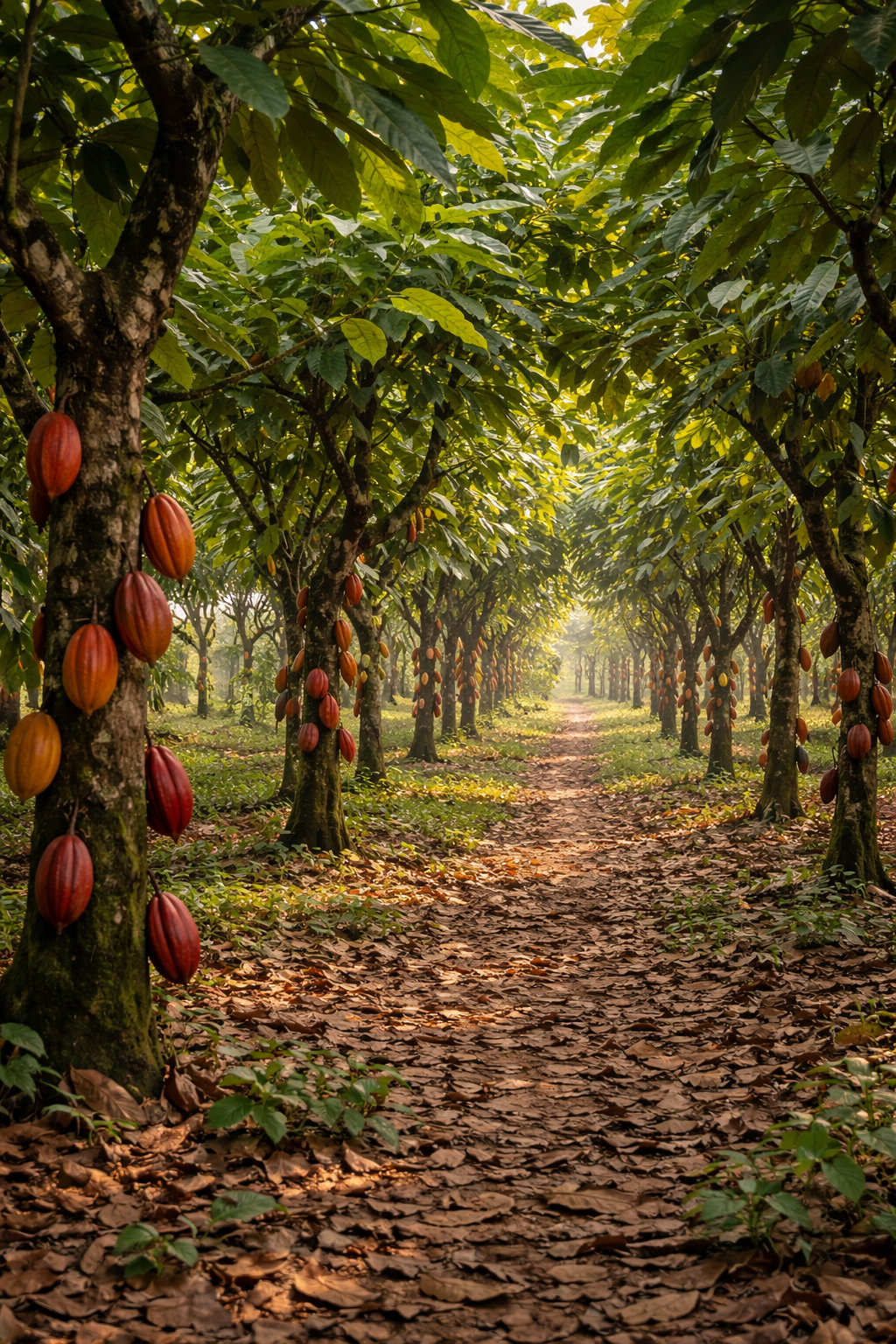
Don’t become the competitor!
So why doesn’t Africa simply make its own chocolate?
Because when African countries try to move up the value chain, they encounter another barrier: tariff escalation. Raw cocoa can enter Western markets with little or no tax. But process it into chocolate, package it, and attempt to sell it abroad, and suddenly tariffs appear. The message is subtle but unmistakable: sell the raw material, not the finished product. Supply the input, but don’t become the competitor.
This economic design is reinforced by the continent’s physical layout.
Much of Africa’s infrastructure: railways, ports, and roads, was built during the colonial era with one purpose: extraction. Lines run from mines and farms to ports, not between neighbouring countries. Even today, it can be cheaper to ship goods from China to East Africa than to move them from one African country to the next. In some cases, it is faster and less expensive to travel through Europe to reach a nearby African capital than to travel directly.
This makes doing business within Africa unnecessarily costly and complex. Trade between African countries is discouraged not by lack of ambition, but by borders, tariffs, transport costs, and logistics designed for extraction rather than cooperation.
Africa’s wealth doesn’t just leave through economic rules. It leaves through the very map of the continent itself.
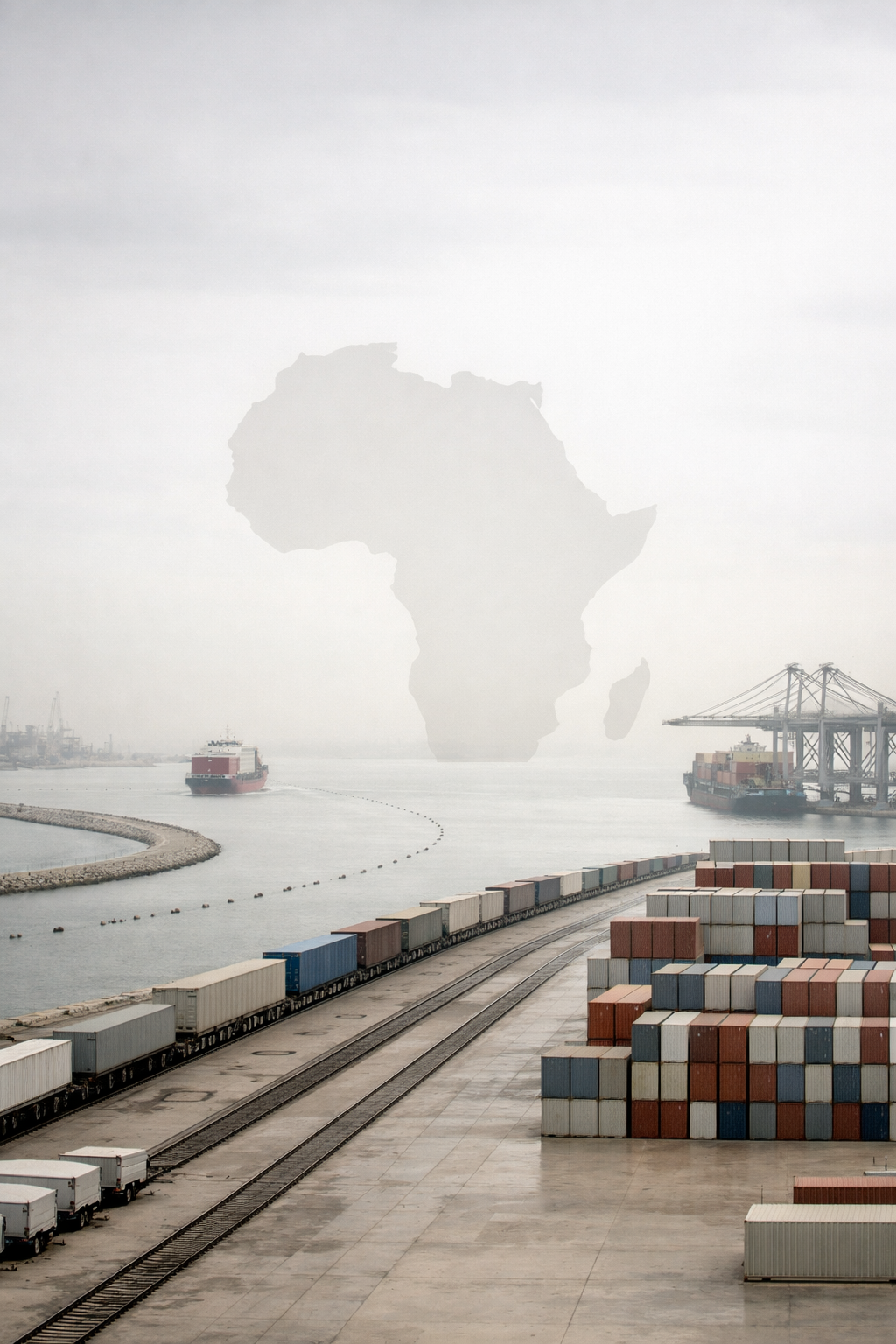
Africa’s infrastructure, built for extraction.
When Poverty Is Penalised
African countries do not just face scarcity; they are actively punished for it.
When nations across the continent borrow money, they do so at far higher interest rates than their Western counterparts; even when the actual risk of default is similar. This so-called “Africa risk premium” means that public budgets are drained before investment in roads, hospitals, and schools even begins.
Africa’s natural wealth creates a paradox of its own. In countries where governments rely heavily on oil, gas, or minerals, they rely less on taxes from citizens. Accountability weakens. The social contract begins to fray.
Add currency distortion, import dependence, and exposure to volatile global commodity prices, and entire economies remain one shock away from crisis. In these conditions, corruption is not simply the result of moral failure, it is often incentivised by the structure itself.
And perhaps the most overlooked form of extraction is human.
African countries invest heavily in training doctors, engineers, and scientists, only to lose them to wealthier nations offering better pay and stability. The receiving countries save billions in training costs. Africa absorbs the loss of skills, capacity, and future leadership.
This is not migration in the abstract. It is a one-way transfer of value that deprives the continent of the very people needed to build resilient systems.
Governance, Corruption, And The Weight Of The System
None of this is to deny Africa’s internal challenges. Corruption, weak institutions, and poor governance are real and in many places, deeply damaging. But treating them as the starting point of Africa’s poverty misses the larger picture.
Corruption does not exist in isolation. It thrives where systems reward short-term extraction over long-term investment, where public office controls access to resource, wealth, and where external actors are willing participants.
Weak governance is often a legacy, not a choice. Many African states inherited borders drawn for control rather than cohesion, institutions designed for extraction rather than service, and economies structured around dependence. Expecting stable governance to emerge quickly from this foundation, while wealth continues to flow outward, is unrealistic.
External and internal forces reinforce each other. Global systems extract value; domestic systems struggle to manage what remains. Accountability becomes harder, reform slower, and public trust easier to erode.
Understanding Africa’s poverty requires holding both truths at once.
Where The Narrative Begins To Shift
Across the continent, Africa is beginning to rewrite the rules that once confined it. The African Continental Free Trade Area is attempting to undo trade patterns inherited from colonialism, connecting African economies to one another rather than routing value outward. Digital finance and mobile technology are allowing innovation to leapfrog outdated systems. Banking the unbanked, scaling businesses without traditional infrastructure, and creating entirely new markets.
At the centre of this shift is Africa’s greatest asset: its people.
The continent is young, connected, and increasingly entrepreneurial. Small businesses, start-ups, and informal enterprises are no longer mechanisms for survival; they are engines of growth. From fintech to agriculture, energy to logistics, African entrepreneurs are building solutions shaped by lived reality rather than imported models; not waiting to be rescued, but designing systems that work.
Africa is poor because the global economic system was designed to extract from it and for a long time, that system has worked exactly as intended. But a population that understands how systems operate is far more difficult to exploit.
The world has grown accustomed to taking from Africa.
Africa, increasingly, is learning how to keep, and to define, its own story.
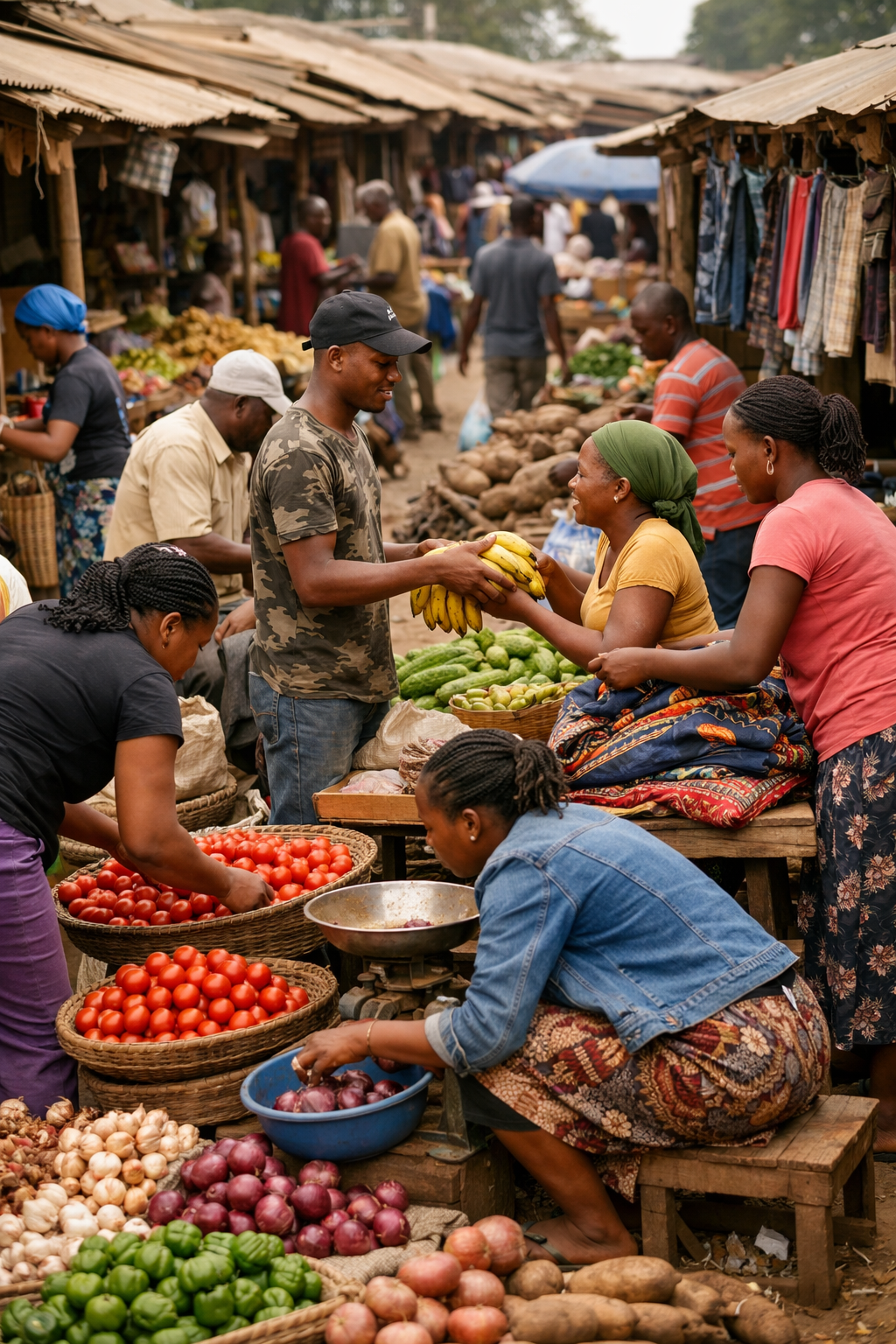
Mama Africa
